

How Often Should You Get Massage? Complete Frequency Guide
How Often Should You Get Massage? Complete Frequency Guide

Massage Frequency by Type - Detailed Guide
Understanding how often to get massage starts with knowing different massage types serve different purposes, each with optimal frequency recommendations.
Therapeutic/Medical Massage Frequency
Purpose: Pain relief, injury recovery, chronic condition management
Recommended Frequency: Weekly for 4-8 weeks, then bi-weekly for maintenance
Why This Frequency: Therapeutic massage addresses specific medical issues requiring consistent treatment. Weekly sessions allow:
- Progressive tissue repair and healing
- Consistent pain management
- Cumulative therapeutic benefits
- Tracking improvement over time
- Preventing condition from worsening
Conditions Requiring Weekly Therapeutic Massage:
- Chronic back pain or neck pain
- Arthritis and joint inflammation
- Fibromyalgia symptoms
- Post-surgery rehabilitation
- Sports injuries recovery
- Sciatica pain management
- Frozen shoulder treatment
- Tension headaches and migraines
Treatment Timeline:
- Weeks 1-4: Weekly sessions, acute symptom relief
- Weeks 5-8: Weekly sessions, continued improvement
- Weeks 9+: Bi-weekly maintenance, prevent recurrence
Expected Results: Most clients notice 40-60% improvement after 4 weekly sessions, 70-80% improvement after 8 sessions. Maintenance every 2-3 weeks sustains results.
Cost Consideration (Sylhet): Weekly therapeutic massage: ৳3,500/session × 4 = ৳14,000/month After 2 months, reduce to bi-weekly: ৳7,000/month
Relaxation/Swedish Massage Frequency
Purpose: Stress relief, mental relaxation, general wellness
Recommended Frequency: Bi-weekly (every 2 weeks)
Why This Frequency: Relaxation massage benefits accumulate gradually. Bi-weekly sessions provide:
- Consistent stress management
- Sustained relaxation benefits
- Affordable ongoing wellness
- Prevention of stress buildup
- Regular self-care routine
Ideal For:
- High-stress professionals
- New parents managing stress
- Students during exam periods
- Anyone seeking work-life balance
- Mental health support
- Sleep improvement
- General anxiety reduction
Benefits Timeline:
- After 1st session: Immediate relaxation, improved mood
- After 2 weeks: Stress levels begin rising again
- 2nd session: Reset stress, maintain benefits
- After 3+ months: Long-term stress resilience improves
Flexibility: During high-stress periods (project deadlines, exams, life events), increase to weekly. During calmer periods, reduce to monthly.
Cost Consideration (Sylhet): Bi-weekly relaxation massage: ৳3,000/session × 2 = ৳6,000/month Package deals reduce cost to ৳5,000-5,500/month
Deep Tissue Massage Frequency
Purpose: Chronic muscle tension, knots, deep-seated pain
Recommended Frequency: Bi-weekly to monthly
Why This Frequency: Deep tissue massage works intensely on muscle layers, requiring recovery time between sessions:
- Muscles need 7-14 days to process and adapt
- Too frequent = soreness, bruising, inflammation
- Proper spacing = optimal tissue remodeling
- Allows body to integrate therapeutic changes
Treatment Phases:
Phase 1 – Intensive (Weeks 1-6):
- Frequency: Bi-weekly (every 2 weeks)
- Goal: Break down adhesions, release chronic tension
- Sessions: 6 total
Phase 2 – Maintenance (Month 3+):
- Frequency: Monthly
- Goal: Prevent tension from rebuilding
- Sessions: 12/year
Post-Session Recovery: Days 1-2: Mild soreness (normal) Days 3-7: Increased flexibility, reduced tension Days 8-14: Peak benefits Day 15+: Time for next session
Who Needs Deep Tissue:
- Desk workers with chronic shoulder/neck tension
- Athletes with muscle tightness
- Manual laborers with overused muscles
- Anyone with postural problems
- People with scar tissue or adhesions
Warning Signs of Too-Frequent Deep Tissue:
- Bruising or discoloration
- Persistent soreness beyond 3 days
- Increased inflammation
- Reduced range of motion
- Fatigue or exhaustion
Cost Consideration (Sylhet): Bi-weekly deep tissue: ৳4,000/session × 2 = ৳8,000/month Monthly maintenance: ৳4,000/month
Sports Massage Frequency
Purpose: Athletic performance, injury prevention, recovery
Recommended Frequency: Varies by training intensity
For Competitive Athletes:
- During heavy training: 2-3 times weekly
- Pre-competition week: 2 times (early week + day before event)
- Post-competition: Within 24-48 hours
- Off-season: Weekly to bi-weekly
For Active/Recreational Athletes:
- Regular training: Weekly
- Moderate activity: Bi-weekly
- Occasional exercise: Monthly
Why Athletes Need Frequent Massage:
- Faster muscle recovery between training sessions
- Injury prevention through tension release
- Improved flexibility and range of motion
- Enhanced blood circulation and nutrient delivery
- Lactic acid and metabolic waste removal
- Mental relaxation and focus improvement
Sports Massage Timing Strategy:
Pre-Event (2-7 days before): Light sports massage, stimulate muscles, increase circulation
Day Before Event: Very light maintenance only, no deep work
Post-Event (within 48 hours): Flush out lactic acid, reduce soreness, accelerate recovery
Training Phase: Weekly or bi-weekly deep sports massage, maintain optimal muscle condition
Professional Athletes (Sylhet): Many train at local gyms and football clubs, using sports massage 2-3x weekly for peak performance.
Cost Consideration: 2x weekly sports massage: ৳3,500 × 8 = ৳28,000/month Monthly packages available: ৳20,000-25,000/month (savings)
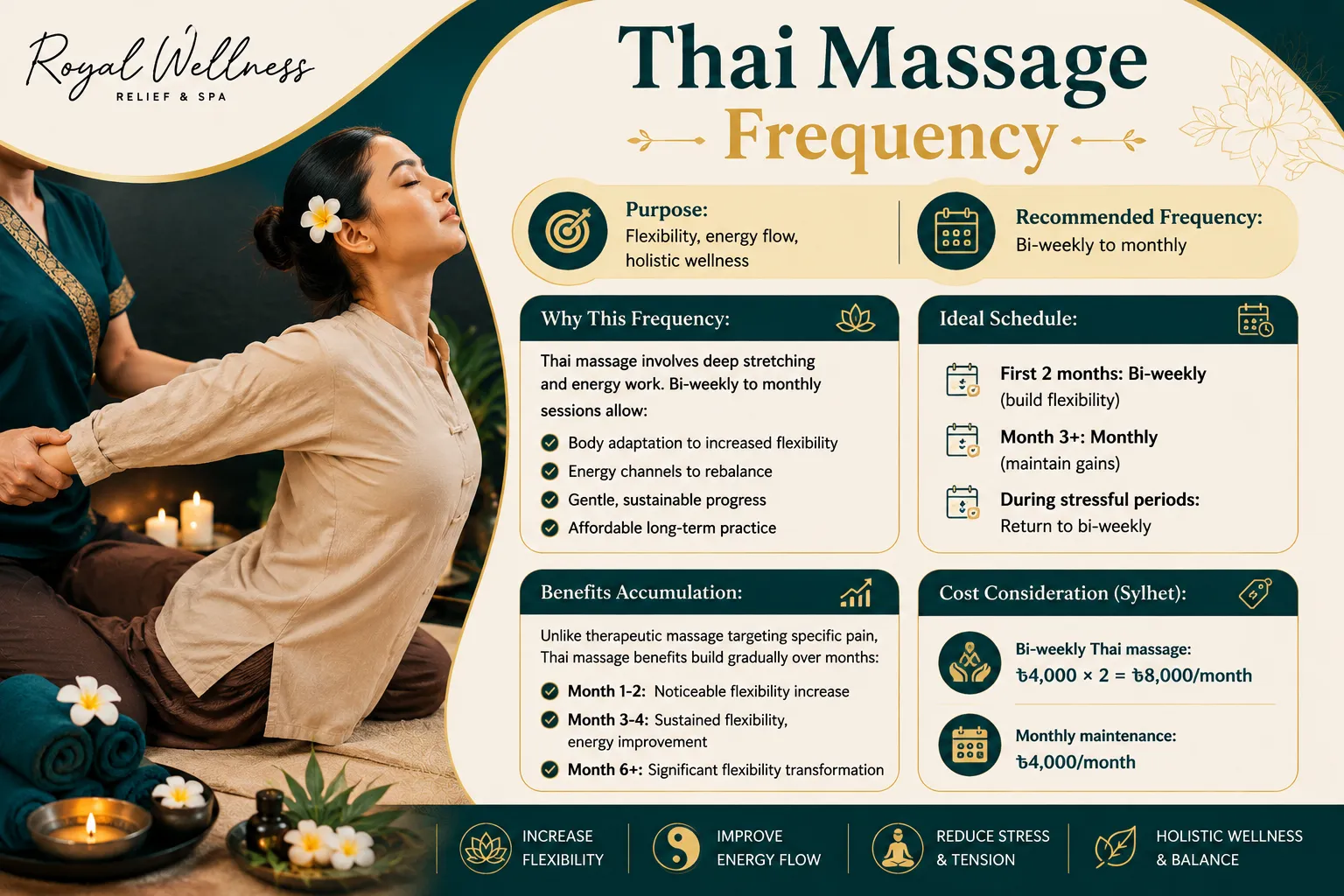
Thai Massage Frequency
Purpose: Flexibility, energy flow, holistic wellness
Recommended Frequency: Bi-weekly to monthly
Why This Frequency: Thai massage involves deep stretching and energy work. Bi-weekly to monthly sessions allow:
- Body adaptation to increased flexibility
- Energy channels to rebalance
- Gentle, sustainable progress
- Affordable long-term practice
Ideal Schedule:
- First 2 months: Bi-weekly (build flexibility)
- Month 3+: Monthly (maintain gains)
- During stressful periods: Return to bi-weekly
Benefits Accumulation: Unlike therapeutic massage targeting specific pain, Thai massage benefits build gradually over months:
- Month 1-2: Noticeable flexibility increase
- Month 3-4: Sustained flexibility, energy improvement
- Month 6+: Significant flexibility transformation
Cost Consideration (Sylhet): Bi-weekly Thai massage: ৳4,000 × 2 = ৳8,000/month Monthly maintenance: ৳4,000/month
Hot Stone & Aromatherapy Massage Frequency
Purpose: Deep relaxation, luxury wellness, stress relief
Recommended Frequency: Bi-weekly to monthly
Why This Frequency: These specialty massages offer premium relaxation:
- Effects last 2-4 weeks
- More expensive than standard massage
- Perfect for regular self-care treats
- Complement other massage types
Ideal Use:
- Monthly luxury wellness ritual
- Bi-weekly during high-stress periods
- Special occasion treatments
- Complement weekly therapeutic massage
Cost Consideration (Sylhet): Hot stone massage: ৳4,500-5,000/session Aromatherapy massage: ৳4,000-4,500/session Monthly frequency most affordable
Factors Affecting Your Ideal Massage Frequency
How often should you get massage isn’t one-size-fits-all. Eight key factors determine your optimal massage schedule:
1. Health Condition and Pain Level
Chronic Pain/Medical Conditions:
- Severe chronic pain: 2x weekly initially
- Moderate chronic pain: Weekly
- Mild chronic pain: Bi-weekly
- Recovered/maintenance: Monthly
Specific Conditions:
Back Pain:
- Acute flare-up: 2x weekly for 2 weeks
- Chronic ongoing: Weekly for 8 weeks
- Maintenance: Bi-weekly to monthly
Headaches/Migraines:
- Frequent (3+/week): Weekly massage
- Occasional (1-2/week): Bi-weekly massage
- Rare prevention: Monthly massage
Arthritis:
- Active inflammation: Weekly gentle massage
- Managed condition: Bi-weekly to monthly
Fibromyalgia:
- Symptom management: 2x weekly to weekly
- Maintenance: Bi-weekly
Post-Surgery Recovery:
- Early recovery (cleared by doctor): 2x weekly
- Progressive recovery: Weekly
- Late recovery: Bi-weekly
2. Age and Life Stage
Age 20-40:
- Active lifestyle: Weekly to bi-weekly
- Sedentary lifestyle: Bi-weekly to monthly
- High-stress career: Weekly
Age 40-60:
- Recommended minimum: Bi-weekly
- With chronic conditions: Weekly
- Active/athletic: Weekly
- Maintenance of flexibility: Bi-weekly
Age 60+:
- General wellness: Weekly to bi-weekly
- Mobility issues: Weekly
- Arthritis management: Weekly
- Social/mental health: Bi-weekly minimum
Aging Benefits: Regular massage as you age maintains:
- Flexibility and range of motion
- Circulation and cardiovascular health
- Joint mobility and pain reduction
- Mental clarity and mood
- Sleep quality
- Overall quality of life
Studies show seniors receiving weekly massage report 45% better mobility and 60% improved quality of life.
3. Physical Activity Level
Sedentary/Office Work:
- Recommended: Bi-weekly
- Why: Counteracts sitting, prevents postural problems
- Focus: Neck, shoulders, lower back
Moderate Activity (Exercise 2-3x/week):
- Recommended: Weekly to bi-weekly
- Why: Supports recovery, maintains flexibility
- Focus: Full body wellness
High Activity (Exercise 4-6x/week):
- Recommended: Weekly
- Why: Accelerates recovery, prevents overuse injuries
- Focus: Sports massage, muscle recovery
Competitive Athletes:
- Recommended: 2-3x weekly
- Why: Peak performance, injury prevention
- Focus: Pre/post training, competition prep
Manual Labor Jobs:
- Recommended: Weekly
- Why: Overuse prevention, pain management
- Focus: Most-used muscle groups
4. Stress Level and Mental Health
High-Stress Lifestyle:
- Corporate executives: Weekly
- Healthcare workers: Weekly
- Entrepreneurs: Weekly to bi-weekly
- Teachers: Bi-weekly (more during exam season)
Moderate Stress:
- Most professionals: Bi-weekly
- Balanced lifestyle: Bi-weekly to monthly
Low Stress:
- Maintenance wellness: Monthly
- Preventive care: Monthly
Mental Health Support: Research shows massage significantly helps:
- Anxiety reduction: Weekly most effective
- Depression management: Bi-weekly minimum
- PTSD support: Weekly initially, then bi-weekly
- Sleep disorders: Weekly to bi-weekly
Stress Management Timeline:
- Week 1-2: Immediate cortisol reduction
- Week 3-8: Sustained stress resilience
- Month 3+: Long-term mental health improvement
Clients with anxiety report 50% symptom reduction after 8 weekly massage sessions.
5. Budget Considerations
Budget-Friendly Massage Schedule:
Limited Budget (৳3,000-5,000/month):
- Monthly full massage (60-75 min): ৳3,500-4,500
- Or bi-monthly premium massage: ৳7,000 every 2 months
- Focus on maintenance, prevention
Moderate Budget (৳6,000-10,000/month):
- Bi-weekly massage (60 min): ৳6,000-7,000
- Or monthly massage + monthly express session
- Balanced wellness approach
Flexible Budget (৳10,000+/month):
- Weekly massage: ৳12,000-14,000
- Or weekly + bi-weekly specialty treatment
- Optimal therapeutic frequency
Money-Saving Strategies:
Massage Packages: Buy 6-12 session packages, save 20-30% Example: 6-session package ৳18,000 (vs ৳21,000 individual)
Off-Peak Discounts: Weekday morning slots often 10-15% cheaper
Express Sessions: 30-45 min sessions cost 40-60% less, maintain frequency on budget
Loyalty Programs: Regular clients get points, free sessions, priority booking
Cost-Benefit Analysis: Weekly massage (৳14,000/month) = ৳168,000/year Alternative costs if NOT getting massage:
- Pain medication: ৳50,000-100,000/year
- Doctor visits: ৳30,000-60,000/year
- Reduced productivity: Priceless
- Lower quality of life: Priceless
Massage as investment in health, not expense.
6. Personal Health Goals
Goal: Pain Relief
- Frequency: 2x weekly to weekly (8-12 weeks)
- Then reduce to maintenance: Bi-weekly to monthly
- Timeline: 2-3 months to significant improvement
Goal: Stress Management
- Frequency: Weekly to bi-weekly
- Ongoing indefinitely
- Long-term mental health investment
Goal: Improved Flexibility
- Frequency: Weekly (first 2 months)
- Then bi-weekly maintenance
- Combine with stretching routine
Goal: Better Sleep
- Frequency: Weekly initially
- Reduce to bi-weekly after improvement
- Evening sessions most effective
Goal: Athletic Performance
- Frequency: 2-3x weekly during training
- Weekly during maintenance
- Pre/post competition timing critical
Goal: Posture Improvement
- Frequency: Weekly (first 3 months)
- Combine with ergonomic changes
- Bi-weekly maintenance
Goal: General Wellness
- Frequency: Monthly minimum
- Bi-weekly optimal
- Preventive health approach
7. Previous Massage Experience
First-Time/New to Massage:
- Start: Bi-weekly to monthly
- Why: Allow body to adapt
- Avoid: Too frequent initially (may cause soreness)
- Build up: Gradually increase if needed
Experienced/Regular Massage Recipients:
- Flexibility: Weekly to monthly based on needs
- Body adapted: Can handle more frequent sessions
- Know preferences: Customize schedule easily
Long Break from Massage:
- Restart: Monthly, then increase to bi-weekly
- Body needs re-adaptation period
- Avoid jumping straight to weekly
8. Specific Life Circumstances
Pregnancy:
- 2nd trimester: Bi-weekly (safe period)
- 3rd trimester: Weekly (back pain, swelling)
- Post-partum: Weekly (recovery, stress)
Post-Injury Recovery:
- First month: 2x weekly (doctor cleared)
- Month 2-3: Weekly
- Month 4+: Bi-weekly to monthly
Exam/Deadline Stress:
- During period: Weekly to 2x weekly
- After period: Return to normal schedule
Travel/Sedentary Periods:
- Before long trip: 1 session (prevent DVT)
- After long trip: 1 session (recovery)
- During sedentary project: Weekly
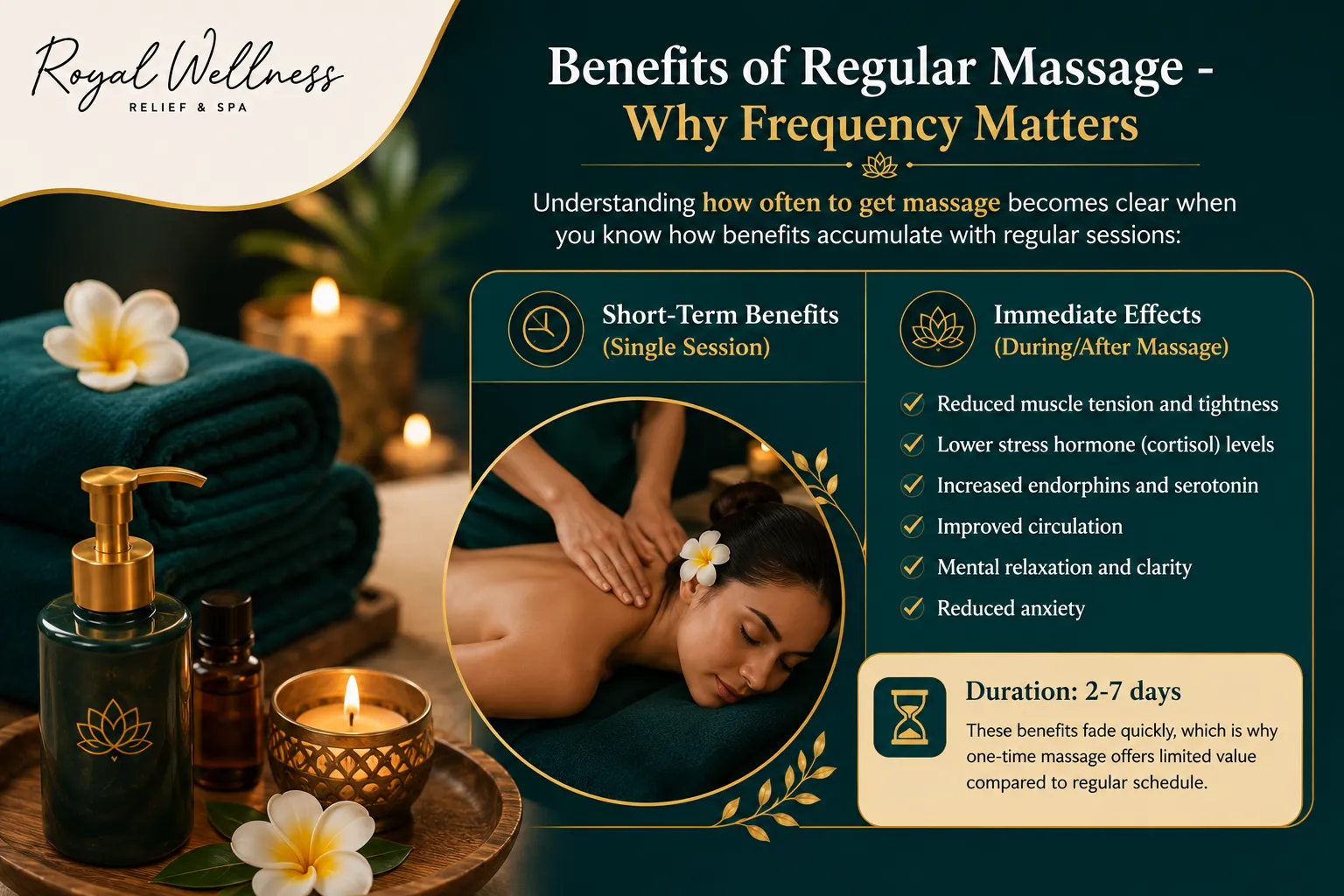
Benefits of Regular Massage - Why Frequency Matters
Understanding how often to get massage becomes clear when you know how benefits accumulate with regular sessions:
Short-Term Benefits (Single Session)
Immediate Effects (During/After Massage):
- Reduced muscle tension and tightness
- Lower stress hormone (cortisol) levels
- Increased endorphins and serotonin
- Improved circulation
- Mental relaxation and clarity
- Reduced anxiety
Duration: 2-7 days
These benefits fade quickly, which is why one-time massage offers limited value compared to regular schedule.
Medium-Term Benefits (Weekly/Bi-Weekly for 4-12 Weeks)
Cumulative Effects:
- Sustained pain reduction (30-60% improvement)
- Improved sleep quality consistently
- Better stress management and resilience
- Increased flexibility and range of motion
- Reduced frequency of tension headaches
- Lower blood pressure
- Improved posture
Duration: As long as regular sessions continue
Missing sessions causes gradual benefit regression over 2-4 weeks.
Long-Term Benefits (3+ Months Regular Massage)
Transformative Effects:
- Chronic pain significantly reduced or eliminated
- Enhanced immune system function
- Improved cardiovascular health
- Better body awareness and posture
- Long-term stress resilience
- Reduced injury risk
- Improved athletic performance
- Better mental health and mood stability
- Higher quality of life
Research-Backed Long-Term Benefits:
Study 1: Weekly massage for 12 months:
- 70% chronic pain reduction
- 65% improved sleep quality
- 55% reduced anxiety symptoms
Study 2: Bi-weekly massage for 6 months:
- 40% fewer sick days
- 50% improved immune markers
- 45% better stress management
Study 3: Regular massage over 2 years:
- 60% reduced healthcare costs
- 50% fewer pain medications
- Significantly better quality of life scores
Benefits by Massage Frequency Comparison
Frequency | Pain Relief | Stress Management | Flexibility | Cost/Month (Sylhet) |
2x Weekly | Excellent (90%) | Excellent (90%) | Excellent | ৳24,000-28,000 |
Weekly | Excellent (80%) | Excellent (85%) | Very Good | ৳12,000-14,000 |
Bi-Weekly | Very Good (60%) | Very Good (70%) | Good | ৳6,000-8,000 |
Monthly | Good (40%) | Good (50%) | Moderate | ৳3,000-4,500 |
Occasional | Minimal (20%) | Minimal (25%) | Minimal | Variable |
Key Insight: Weekly to bi-weekly frequency offers best balance of results and affordability for most people.
Signs You Need More Frequent Massage
Not sure if current massage frequency is enough? Watch for these signals:
Physical Signs
Muscle Tension Returning Quickly: If tension returns within 3-5 days after massage, increase frequency.
Persistent Pain: Pain not improving after 4-6 sessions = need more frequent treatment or longer sessions.
Reduced Flexibility: Stiffness returning within a week = need more frequent stretching-focused massage.
Sleep Problems Returning: If sleep quality drops between sessions, increase frequency.
Frequent Headaches: 2+ headaches weekly despite massage = need weekly or 2x weekly sessions.
Injury-Prone: Frequently pulling muscles or getting injured = need preventive weekly massage.
Mental/Emotional Signs
High Stress Levels: Feeling overwhelmed between sessions = need more frequent stress management massage.
Anxiety Symptoms: If anxiety returns strongly within 5-7 days, weekly massage may help.
Mood Swings: Irritability or mood fluctuations = need more consistent massage schedule.
Burnout Feelings: Persistent exhaustion = need weekly massage for sustained support.
Lifestyle Signs
Increased Workload: New stressful project = temporarily increase massage frequency.
Training Intensification: Harder workouts = need more frequent sports massage.
Life Changes: Major life events (moving, new job, relationship changes) = increase frequency temporarily.
Seasonal Factors: Cold/rainy season stiffness = may need more frequent sessions in winter.
What to Do
If experiencing 3+ signs:
- Increase frequency by one level (monthly → bi-weekly, bi-weekly → weekly)
- Maintain for 4-8 weeks
- Reassess and adjust
If experiencing 1-2 signs:
- Add occasional extra session during high-need periods
- Maintain regular schedule otherwise
Can You Get Massage Too Often? Risks and Warnings
While regular massage offers tremendous benefits, too frequent massage can cause problems:
Signs of Over-Massage
Physical Warning Signs:
- Persistent soreness lasting 4+ days
- Bruising or skin discoloration
- Increased inflammation or swelling
- Reduced range of motion (worse, not better)
- Fatigue and exhaustion after sessions
- Skin sensitivity or irritation
- Headaches after massage (not before)
When These Occur: Reduce frequency, take 1-2 week break, discuss with therapist.
Recommended Maximum Frequency
General Population: Maximum 3x weekly for deep work, daily for gentle relaxation massage technically safe but impractical.
Athletes/High-Need: Daily light massage acceptable, but limit deep tissue to 3x weekly maximum.
Therapeutic Treatment: Even for severe conditions, 3x weekly maximum unless under medical supervision.
Rest Days Are Important
Why Space Between Sessions Matters:
Muscle Recovery: Muscles need 24-48 hours to process deep massage, repair microtrauma, adapt to changes.
Inflammation Management: Too-frequent deep massage can cause chronic low-grade inflammation.
Diminishing Returns: Daily massage provides minimal additional benefit over 3x weekly, but costs 2x more.
Body Adaptation: Spacing sessions allows body to integrate and maintain benefits longer.
Special Populations – Extra Caution
Pregnant Women: Maximum weekly, avoid in 1st trimester unless cleared by doctor.
Elderly/Fragile: Maximum bi-weekly for deep work, weekly for gentle massage.
On Blood Thinners: Maximum monthly deep massage, weekly gentle only.
Recent Surgery: Follow surgeon recommendations strictly.
Active Infection/Fever: Skip massage entirely until recovered.
Frequently Asked Questions - Massage Frequency
Is weekly massage too much?
No. Weekly massage is safe and beneficial for most people. Athletes, chronic pain sufferers, and high-stress individuals benefit greatly from weekly sessions. Only concern is budget, not health.
What happens if I skip a massage session?
Benefits gradually fade. After 2-3 weeks, muscle tension returns, stress accumulates, pain may increase. One skipped session won’t undo progress, but frequent skipping reduces cumulative benefits. Consistency matters most.
Can I get massage two days in a row?
Generally not recommended for deep tissue or therapeutic massage. Muscles need 24-48 hours recovery. Gentle relaxation massage can be done consecutively, but diminishing returns. Better to space sessions.
How long until I see results from regular massage?
Immediate benefits after first session. Cumulative benefits become noticeable after 4-6 weekly sessions (about 1-2 months). Maximum benefits after 3-6 months of consistent schedule.
If monthly massage is all I can afford, is it worth it?
Yes! Monthly massage provides significant preventive benefits, stress management, and wellness support. Not as effective as weekly/bi-weekly for therapeutic needs, but definitely worthwhile for maintenance.
Should I get the same massage type every time?
Not necessarily. You can alternate types based on needs. Example: Week 1 therapeutic massage (pain relief), Week 3 Swedish massage (relaxation). Discuss with therapist for personalized rotation.
Can I get massage while sick?
No. Skip massage if you have fever, infection, flu, contagious illness. Massage when sick can worsen symptoms, spread infection, and stress immune system. Resume when fully recovered.
Our All Locations
10th Floor Hotel Noorjahan Grand, Waves 1 Dargah Gate, Sylhet, Bangladesh, 3100


